
Token buybacks are crypto’s new power move. Most are doing it wrong.
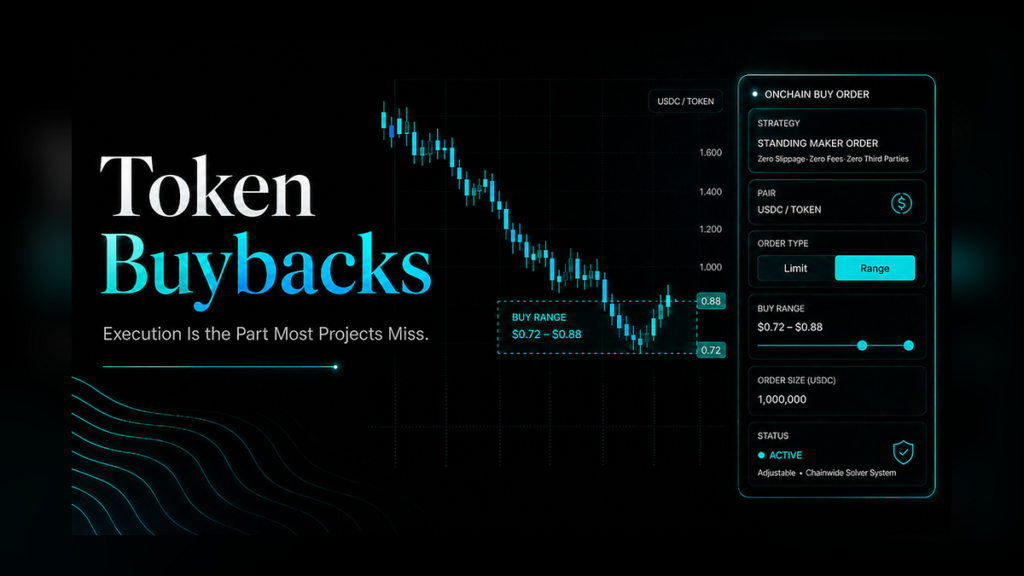
[ad_1] The AMM Approach Buybacks are mostly performed as takers on an AMM, swapping one token for another. When acting as a taker, the trader, or the token project in this case, accepts the available liquidity, the pool depth, the fees, the price impact, and the risks of buying into an active, transparent onchain market. […]
What Is a Security Token And How Does It Work?

[ad_1] What Is a Security Token And How Does It Work? /Blog [ad_2] Source link
DOGE Eyes Recovery From $0.12 as On-Chain Accumulation Grows and Token Usage Expands
[ad_1] Dogecoin (DOGE) is once again testing investors’ patience as it trades near the $0.12 level, a zone that has become a focal point after weeks of volatility. Related Reading The meme coin has shed more than 20% from its recent highs near $0.15, but recent price action suggests selling pressure may be easing. At […]
Should Token Projects Be Their Own Market Maker?

[ad_1] Rethinking CEX Listings, Onchain Liquidity, and What “Market Making” Really Means For years, the default path was simple: launch a token, chase centralized exchange listings, hire a market maker (or don’t), hope it all works out. That path still exists but is it aligned with what token projects actually need? Should token projects be their own […]
ZKsync Cuts Etherscan to Push Native Infrastructure, Eyes Token Utility in 2026

[ad_1] Key Notes Etherscan cannot properly index many native-level ZKsync features. All on-chain data will migrate entirely to the ZKsync native explorer on January 7, 2026. Developers using Etherscan APIs must migrate before the deadline. ZKsync will end Etherscan support for the ZKsync Era on January 7, 2026. Block, transaction, and contract data will move […]